Last Letter First
Play and Win

Pruthvik

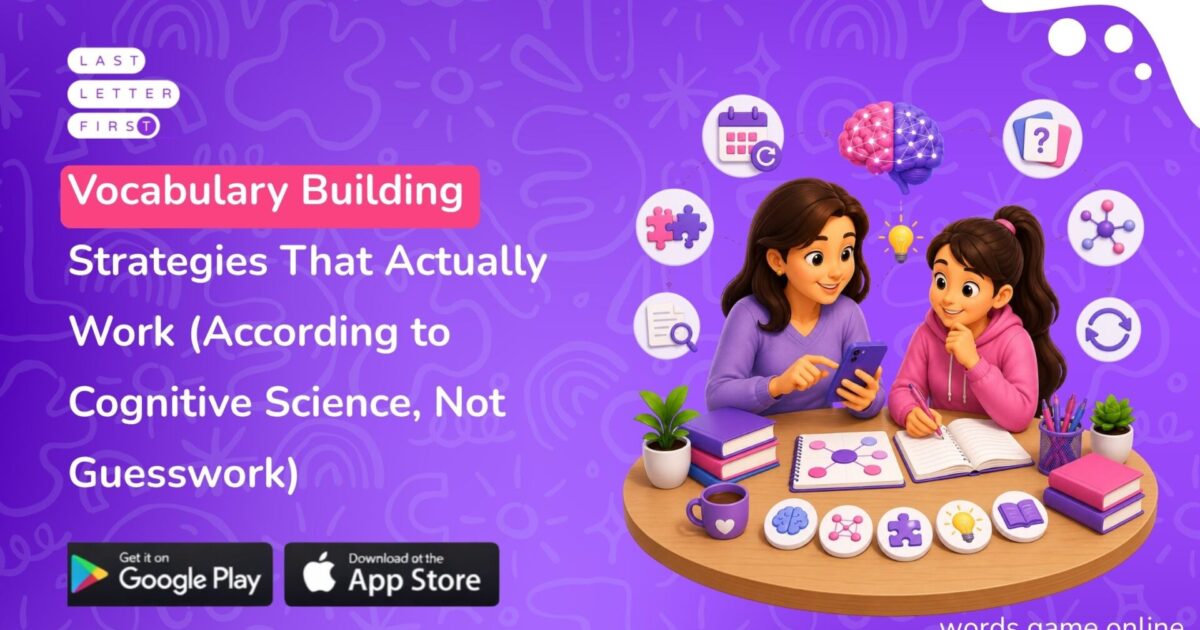
Vocabulary Building Strategies That Actually Work (According to Cognitive Science, Not Guesswork)

Key Takeaways Most vocabulary efforts fail because learners rely on passive exposure instead of active retrieval, the stronger retention driver according to cognitive science. Spaced Repetition outperforms massed study by up to 200% in 7-day retention tests, per Karpicke and Roediger (2008). Stacking multiple vocabulary building strategies into a single daily routine produces compounding retention […]
Vocabulary Building Strategies That Actually Work (According to Cognitive Science, Not Guesswork) Read More »

Word Games vs Puzzles

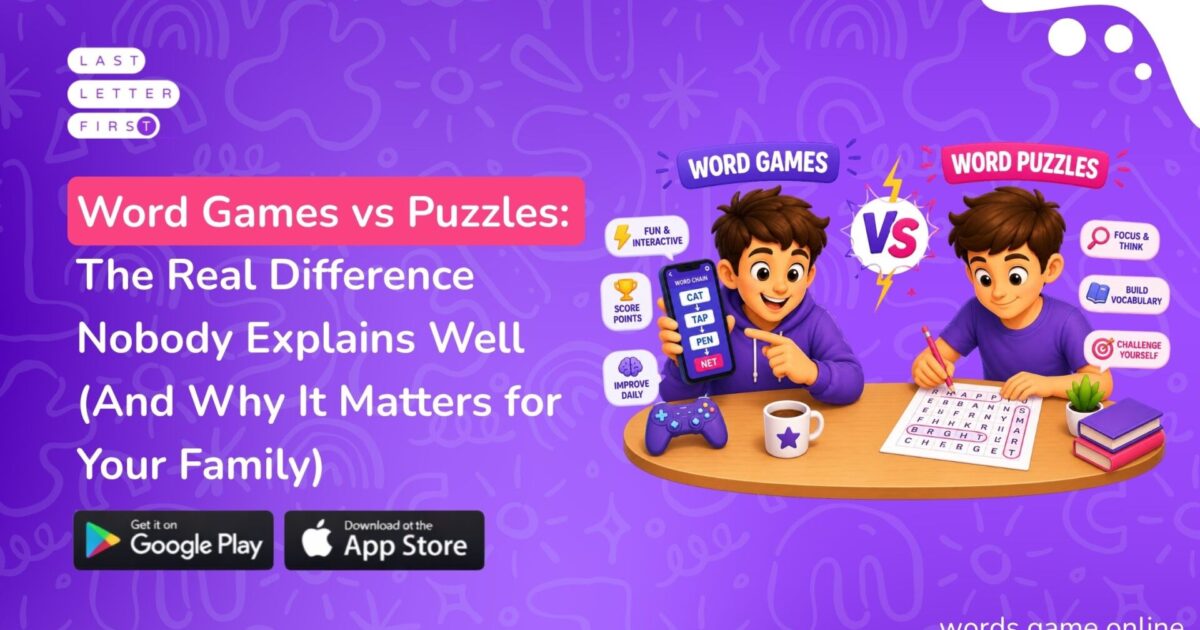
Word Games vs Puzzles: The Real Difference Nobody Explains Well (And Why It Matters for Your Family)

Key Takeaways Word games are social, competitive, and language-building by design, while puzzles are solo, pattern-focused, and self-paced. Multiplayer word games create real-time pressure that accelerates vocabulary recall far more effectively than untimed solo puzzles. Puzzles aren’t inferior. They build deep focus and patience. But they can’t match the social bonding word games deliver. Last

Word Games vs Puzzles: The Real Difference Nobody Explains Well (And Why It Matters for Your Family) Read More »

Vocabulary Building Games

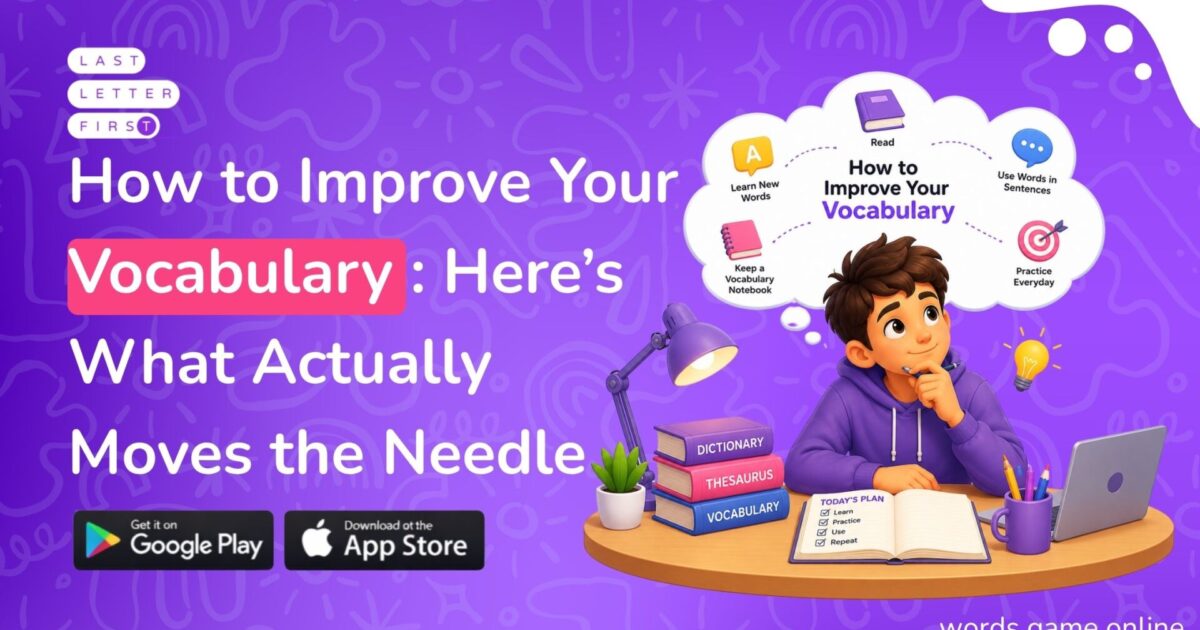
How to Improve Your Vocabulary: Forget Flashcards, Here’s What Actually Moves the Needle

Key Takeaways For Vocabulary Building Games The real vocabulary problem isn’t learning new words, it’s failing to use the ones you already know in conversation and writing. Adults recognize roughly 20,000 to 35,000 words but actively use only a fraction, creating a massive gap between recognition and real use. Spaced repetition and contextual learning lock

How to Improve Your Vocabulary: Forget Flashcards, Here’s What Actually Moves the Needle Read More »

Scroll to Top