
Key Takeaways
- A word association game is any activity where one player says a word and the next player responds with the first related word that comes to mind, playable anywhere with zero equipment.
- The concept traces back to Freud and Jung, who used word association clinically to study unconscious thought patterns.
- Basic rules are straightforward: respond instantly with a connected word, and you’re out if you hesitate, repeat, or say something unrelated.
- Variations like last-letter chains, category rounds, and speed formats transform a casual icebreaker into a genuinely competitive challenge.
- Modern formats, including connections puzzles and app-based games, add structured scoring that rewards strategic thinking alongside quick reflexes.
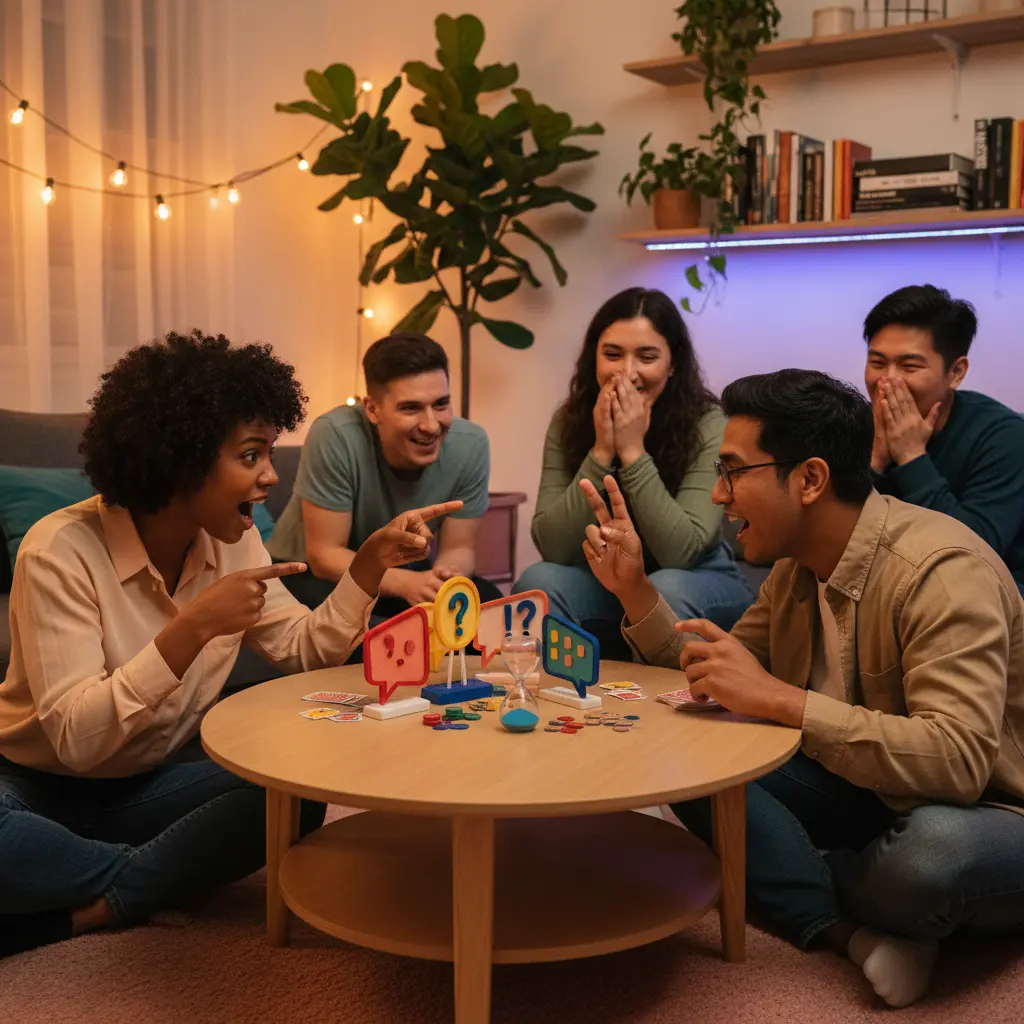
Most people dismiss word association as barely a game. That take is wrong. Here’s the paradox: the game that looks like it requires zero skill is the same one professional improvisers, cognitive researchers, and competitive puzzle designers keep returning to. Word association isn’t simple. It’s deceptively deep.
Whether you’re hosting a game night or hunting for something competitive, this guide covers the real rules, the best variations, and why the format has quietly evolved into something worth taking seriously.
What Is a Word Association Game?
A word association game challenges players to reveal how their brains organize language , say “ocean,” and one person fires back “wave” while another says “blue,” each response tracing a unique mental pathway. From Carl Jung’s clinical Word Association Test to modern party formats, these games have evolved into countless variations. Last Letter First adds a strategic twist by requiring each new word to begin with the previous word’s final letter, turning free association into a fast-paced linguistic challenge.
Basic Rules for Playing Word Association Game
The core rules of word association are simple: one player says a word, the next player immediately responds with a connected word, and play continues around the group. No board, no cards, no app required.
- One player starts by saying any single word.
- The next player responds instantly with a connected word.
- Play moves clockwise or in a set order.
- You’re eliminated if you hesitate beyond three seconds, repeat a word, or say something unrelated.
- Last player standing wins.
The appeal is the pressure. You can’t plan ahead because you don’t know what word you’ll receive.
For groups wanting a softer version, drop elimination and play cooperatively, seeing how long the chain survives before someone stumbles. Cooperative rounds work well with younger kids or as icebreakers.
Multiplayer and Competitive Formats
Variations are where word association transforms from icebreaker into genuinely competitive challenge.
Last-letter chains flip the classic format by requiring each new word to begin with the final letter of the previous word. “Planet” → “tornado” → “octopus” → now someone’s stuck with “s.” This variation punishes common-word reliance. You burn through easy options fast. Limiting your options actually makes the game more interesting.
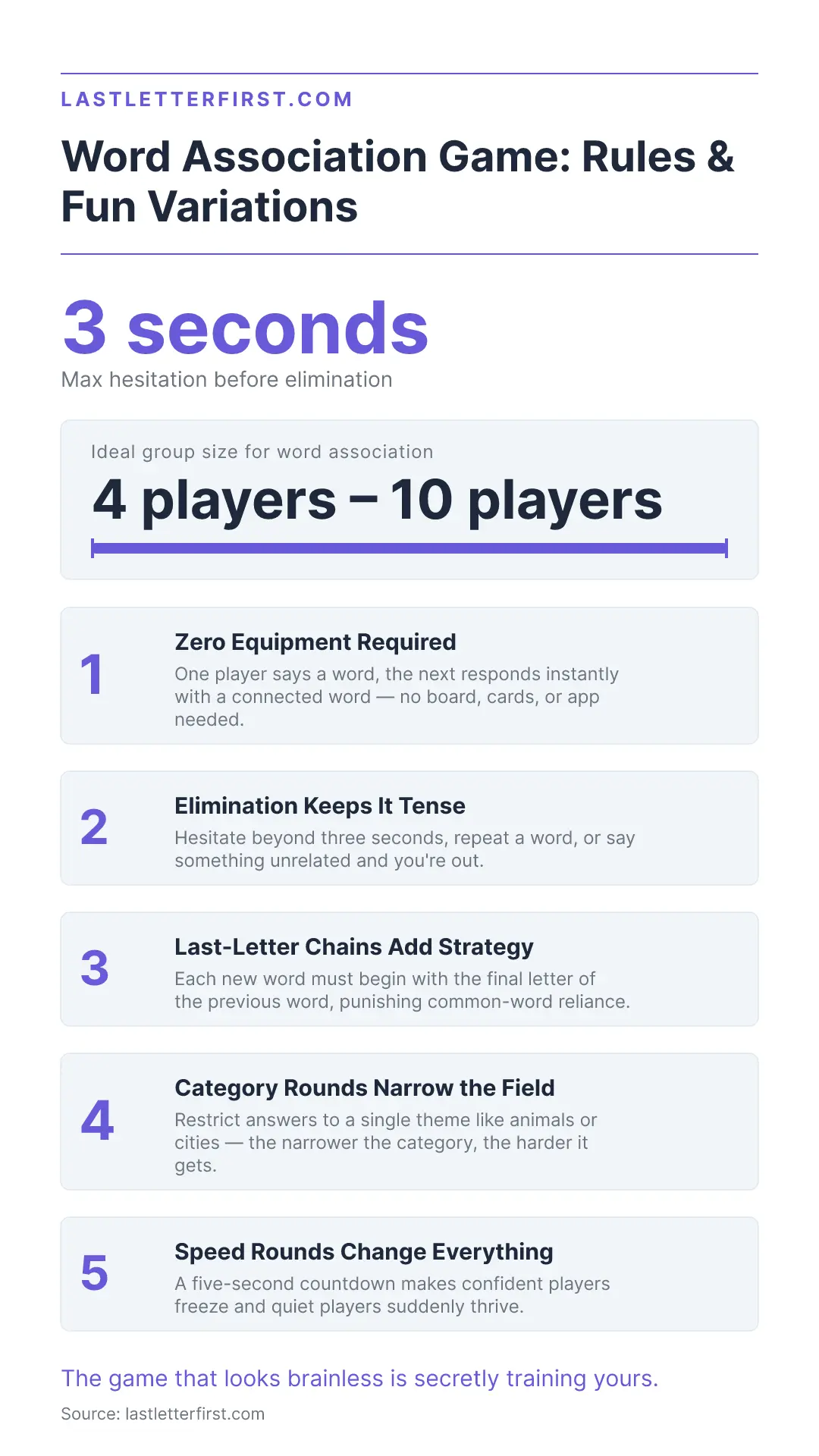
Category rounds restrict answers to a single theme: animals, foods, cities. The narrower the category, the harder the round.
Speed rounds layer a timer on any format. A five-second countdown changes everything. Players who cruise through relaxed rounds suddenly freeze, and quiet players sometimes thrive.
For puzzle lovers, connections puzzles like NYT Connections ask players to sort words into hidden categories, flipping the mechanic from “say the next word” to “guess the connection.”
Tips for Hosting a Word Association Night
Word association becomes a different animal with scoring or teams. Head-to-head duels pit two players with a three-second window, best of five. Team relays run the chain down a line, scoring when the opposing team stumbles. Elimination circles have everyone standing, sitting when they miss. Here’s the paradox: the fewer players remaining, the faster the pace feels, even though time between turns actually increases.
For digital play, apps like Last Letter First build ranked multiplayer around the last-letter variation, giving the format structure the verbal version can’t match. Solo puzzle formats offer a daily analytical twist, and roughly forty-five minutes of active play translates to twelve to fifteen solid rounds.
Tips for Hosting a Word Association Night (Part 2)
Rotate formats every three rounds. Classic free association first, then category play, then speed rounds. Variety keeps energy high.
Set house rules early. Decide whether proper nouns count and how strict associations must be. Getting aligned before round one prevents arguments.
Groups of four to ten are ideal. Fewer than four and you lose spectator energy. More than ten and wait times drag.
What’s Next for Word Association Game
The format Jung used on a therapy couch over a century ago is still evolving. Competitive apps, daily puzzle formats, and growing game-night culture on social media are pushing word association beyond its casual roots. Players want structure, scoring, and replay ability layered on top of the simplicity that made the game worth its weight in gold in the first place.
So grab a few friends, pick a format, and see who flinches first.