
Key Takeaways
- Spelling bee games are word puzzles that challenge players to form as many valid words as possible from a limited set of letters, with at least one mandatory letter that must appear in every answer.
- NYT Spelling Bee popularized the daily format, but several free alternatives offer comparable gameplay without a subscription wall.
- The real gap in the spelling game market isn’t better solo puzzles, it’s the almost total absence of multiplayer spelling experiences that let you compete against real people.
- Strategies differ dramatically by skill level, and etymology-based tricks give experienced spellers a measurable edge.
- Multiplayer word games turn passive vocabulary review into active recall under pressure, which is exactly how lasting word knowledge forms.
Most spelling bee advice starts with “just memorize more words.” Honestly, that’s like telling someone to get stronger by staring at a gym. Players who consistently hit top ranks in 2026 aren’t grinding flashcards. They’re picking the right platforms, learning game mechanics, and spelling with other people instead of alone.
This guide covers how spelling bee games work, compares platforms worth your time, and shows where multiplayer alternatives fill a gap solo puzzles can’t. You can also learn 100 new words a month using word games to turn casual play into real vocabulary growth.
Why Spelling Games Spelling Bee Formats Matter
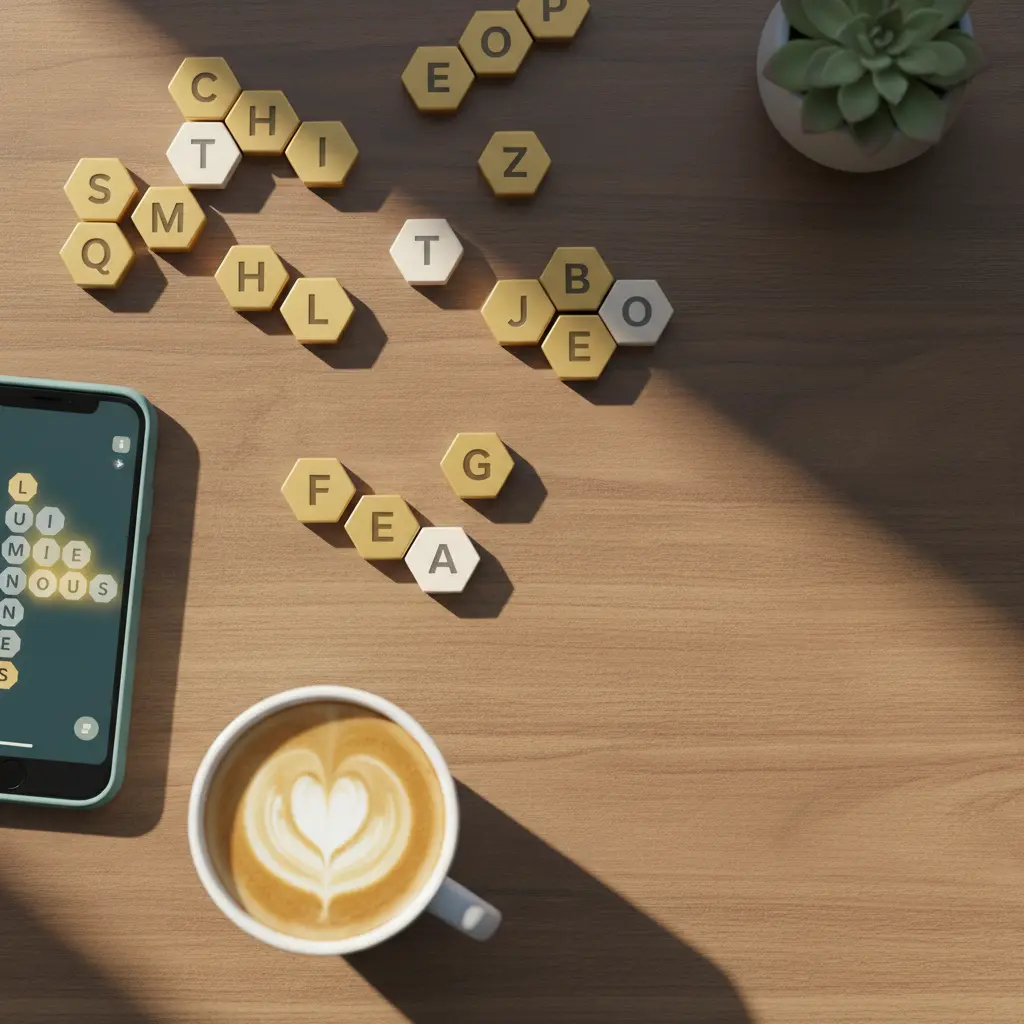
Spelling games spelling bee formats have become a daily ritual for millions of word lovers, challenging players to form valid words from a limited set of letters with one mandatory center letter. At Last Letter First, we celebrate this same love of wordplay , our game flips the script by asking you to chain words where each new word starts with the previous word’s last letter. Whether you’re chasing “Queen Bee” status or building your longest chain on lastletterfirst.com, the thrill of finding the next word never gets old.
Head-to-Head Comparison of Top Spelling Bee Platforms
Several free alternatives to NYT Spelling Bee exist across browsers and app stores, each offering a slightly different spin on the core letter-grid format without requiring a subscription. The differences matter more than most players realize, because scoring systems, accepted word lists, and difficulty levels vary significantly.
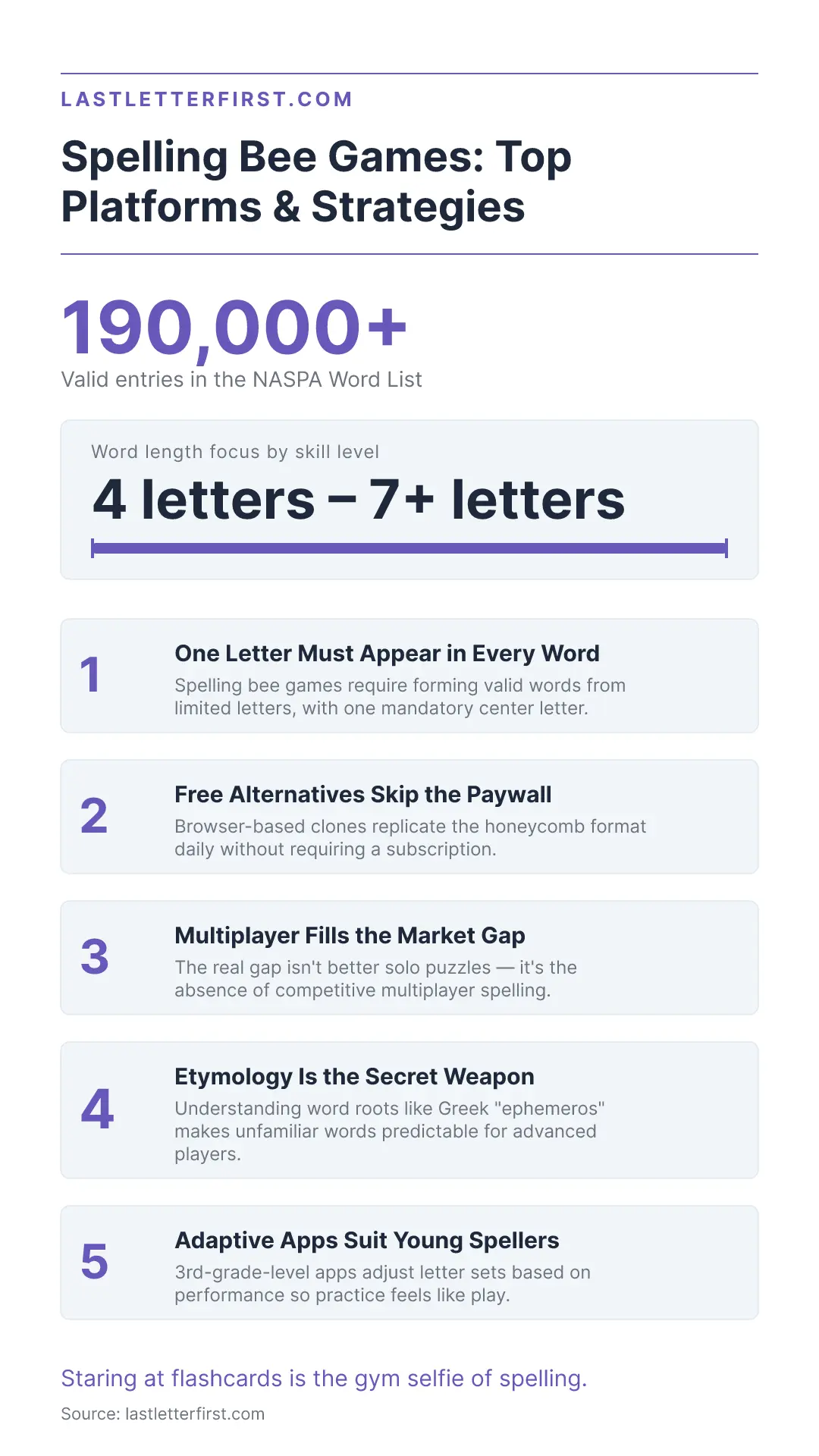
NYT Spelling Bee uses a curated word list maintained by editor Sam Ezersky, meaning some common words get rejected while obscure ones count. Free alternatives typically pull from broader dictionaries, which changes strategy entirely. According to the North American Scrabble Players Association, the NASPA Word List contains over 190,000 valid entries, far more than any single spelling bee puzzle accepts.
| Platform | Cost | Multiplayer | Adaptive Difficulty | Best For |
|---|---|---|---|---|
| NYT Spelling Bee | Subscription | No | No | Daily ritual players |
| Free Bee (browser) | Free | No | No | NYT alternative seekers |
| SpellTower (mobile) | Free / Premium | No | Yes | Visual puzzle fans |
| Spelling Bee-style apps | Free with ads | Rarely | Some | Casual mobile players |
| Multiplayer word games | Free / Freemium | Yes | Varies | Social and competitive players |
Best Free Spelling Bee Games and Apps Worth Trying
If you’re hunting for free games similar to NYT Spelling Bee, browser-based clones replicate the honeycomb format without a paywall, and several mobile apps simulate competition formats for all ages.
For younger players, especially around the 3rd-grade level, look for platforms that offer adaptive difficulty and kid-friendly word lists drawn from grade-appropriate vocabulary. Some apps adjust the letter set based on performance, keeping the challenge calibrated so kids don’t get discouraged. That adaptive element matters for parents who want spelling practice to feel like play, not homework.
For adults, the best free options tend to be browser-based. They load fast, don’t require downloads, and refresh daily. The trade-off is that most lack social features entirely.
Multiplayer and Social Spelling Game Alternatives
Multiplayer word games turn passive vocabulary review into active recall under pressure, which is exactly how lasting word knowledge forms. When you’re spelling against a real person, you can’t coast on comfortable words. That competitive spark separates a forgettable session from genuine skill growth.
You can explore how multiplayer word games improve family vocabulary for a deeper look at why social play changes the equation.
Losing to a friend stings just enough to bring you back tomorrow. That’s the engine. When a parent and a 3rd grader compete on the same word set, both benefit: the child encounters words above their reading level in a low-stakes environment, while the adult rediscovers words they haven’t used in years. I’d argue it’s worth its weight in gold as a way to level up together.
Spelling Bee Strategies by Difficulty Level
Spelling bee success isn’t about memorizing the entire dictionary. It’s about knowing which words to chase at your skill level. The paradox of spelling bee mastery is that players who slow down and focus on fewer words actually improve faster than those who try everything at once.
Beginner tips: Start with four- and five-letter words. Look for common endings like -ING, -TION, and -ED first. And use word finder tools after each round to discover what you missed, since that post-game review is where real learning happens.
Advanced tactics: Hunt the pangram first. It’s worth the most points and often reveals the puzzle’s hidden structure. Study less common prefixes (UN-, RE-, OUT-) and suffixes (-LY, -NESS, -ABLE) systematically. Etymology is your secret weapon here. Understanding that “ephemeral” derives from the Greek root “ephemeros” makes it predictable even if you’ve never seen it. To hit the nail on the head, etymology separates competitive spellers from casual players more than any other single tactic.
| Skill Level | Primary Focus | Key Tactic | Common Mistake |
|---|---|---|---|
| Beginner | 4-5 letter words | Spot common suffixes first | Ignoring the center letter rule |
| Intermediate | 6-7 letter words | Rearrange letter clusters mentally | Chasing obscure words too early |
| Advanced | Pangrams + rare words | Etymology-based prediction | Skipping post-round review |
Tools and Resources to Level Up Your Word Game Skills
The right tools don’t replace skill. They accelerate it. The NASPA Word List overlaps heavily with spelling bee accepted words, and studying it builds vocabulary that pays off across multiple game types.
Anagram solvers help you see combinations you’d never spot alone. Using them as a study aid (not a crutch) builds pattern recognition that makes you faster over time. For the social dimension, multiplayer word games boost family vocabulary in ways solo tools can’t match.
Your Next Move
The spelling bee landscape in 2026 rewards players who combine structured practice with the right tools and a willingness to play against other people. Solo puzzles build a foundation. Multiplayer formats stress-test it.
Pick one strategy from this guide and try it for a week. The best spellers aren’t the ones with the biggest vocabularies. They’re the ones who never stop being curious about the next word they haven’t learned yet.
Frequently Asked Questions
What are the best free spelling bee games for kids to practice at home?
Browser games and apps like SpellingCity offer kid-friendly practice without subscriptions. PBS word games wrap spelling in colorful formats for younger players, and simplified NYT Spelling Bee clones appear on various puzzle sites. Look for games that adjust difficulty automatically, since a game that’s too easy gets boring and one that’s too hard causes frustration. The best options let kids track progress, building motivation through visible improvement.
How do I help my child prepare for a school spelling bee?
Daily five-minute spelling rounds work better than hour-long study sessions. Multiplayer word games where the whole family competes add a social element that makes practice feel like fun. A child who practices five minutes daily for a month will outperform one who crams for two hours the night before. Frame it as game night, not study time.
Are there apps that simulate a real spelling bee competition format?
Yes, several apps replicate live competition formats with timed rounds and elimination mechanics. For kids preparing for school competitions, apps that mirror the actual format (pronouncer reads the word, speller requests definition and language of origin) provide the most transferable practice. Check whether the app uses an official word list, since the word pool affects how realistic the simulation feels.
What is the difference between NYT Spelling Bee and Wordle?
Spelling Bee focuses on forming multiple words from seven letters, with one center letter required in every answer. Wordle is a single five-letter word guessing game with six attempts. Spelling Bee rewards breadth of vocabulary and pattern recognition, while Wordle rewards logical deduction. Strong spellers handle Wordle’s letter pool more easily, and Wordle players develop systematic thinking that helps with pangram hunting.
Are multiplayer spelling games better than solo play for learning?
Multiplayer games often produce faster vocabulary gains because competitive pressure forces recall under time constraints, strengthening memory pathways more effectively than relaxed solo play. Solo puzzles still matter for foundational skills, but combining both formats produces the strongest results. Players who alternate between solo practice and multiplayer competition retain new words longer.
Can Scrabble word finders help with spelling bee practice?
Yes, when used as learning aids. Checking valid words after a round reveals patterns you wouldn’t encounter otherwise. The NASPA Word List overlaps heavily with spelling bee accepted words. The key is using these tools to learn, not to shortcut the game. Players who review solver suggestions after each round improve measurably faster than those who never use tools at all.
The Last Letter First Editorial Team covers word games, vocabulary strategy, and language learning tools. Learn more at lastletterfirst.com.
How do I help my child prepare for a school spelling bee without making it feel like homework?
Turn practice into play using game-based apps and family word challenges that make spelling feel like entertainment rather than study. Try daily five-minute spelling rounds where everyone competes together, incorporate multiplayer word games that let your child play against family members, and use simple reward systems tied to effort rather than perfection. This approach builds confidence and keeps motivation high without the pressure of formal homework.
How do Scrabble dictionaries and word lists apply to spelling bee games?
Official Scrabble dictionaries like the North American Scrabble Word List overlap heavily with spelling bee accepted words, making them valuable study resources. Learning words from these standardized lists and using valid word checkers to verify spellings improves performance across both Scrabble and spelling bee games, since both rely on the same core vocabulary standards. This cross-game knowledge transfers directly and reduces confusion about which words are officially accepted.
Which online spelling games are most effective for building vocabulary?
Games that require word formation from limited letters, like NYT Spelling Bee, are highly effective for building vocabulary because they force active recall under constraints. These constraint-based puzzles create deeper learning than simple memorization because players must think critically about letter combinations, word patterns, and valid spellings simultaneously. The pressure to find multiple words from the same letter set strengthens both spelling accuracy and vocabulary retention.
At what age should kids start participating in spelling bees?
Most children are ready to participate in spelling bees around ages 7 to 8, when they have developed phonetic awareness and basic spelling patterns. Informal spelling games can start earlier with younger children, but competitive formats with judges and rankings become appropriate once kids have the emotional readiness to handle both success and constructive feedback. Developmental readiness varies by child, so observing individual confidence and interest is as important as age.
What tools can help me find the best move in word games?
Best move finders and solver tools analyze your available letters to suggest optimal plays by cross-referencing valid word lists and scoring systems. These tools work identically for Scrabble and spelling bee games, identifying high-value words you might have missed and showing why certain combinations are stronger than others. They are best used as learning aids to understand strategy and word patterns rather than shortcuts that bypass the thinking process.
Where can I find a reliable valid word checker for spelling games?
Online valid word checkers cross-reference official dictionaries instantly to confirm whether a word is accepted in word games. Options include Scrabble-specific checkers that verify words against the North American Scrabble Word List, and general dictionary tools that confirm accepted spellings across multiple word games. Using these tools during practice helps you learn which borderline words are valid and builds confidence in your word knowledge.