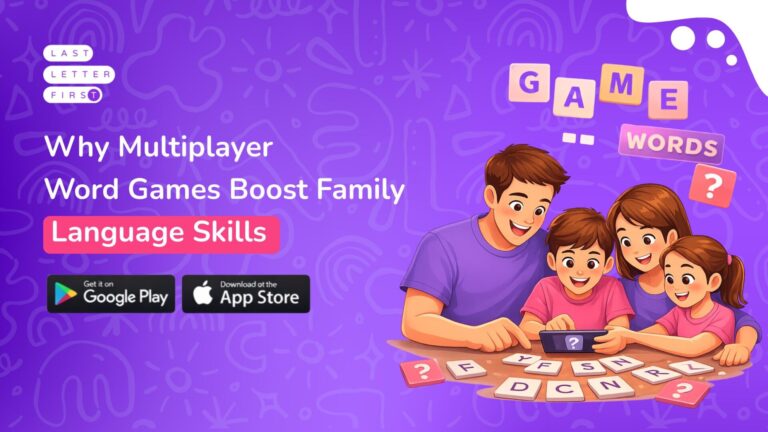

Turn Screen Time Into Language-Building Play
We’ve all seen the “family evening” where everyone is physically in the same room but mentally a thousand miles away, lost in their own glowing rectangles. It’s the modern-day silence that feels a bit, well, lonely. But instead of fighting the screens, why not lean into them?
Multiplayer word games are the perfect way to stop the “zombie scroll” and actually get people talking again. It’s not a formal lesson—it’s just shared chaos, quick thinking, and the inevitable teasing when Dad tries to pass off a word that definitely isn’t in the dictionary. It’s fun first, and if everyone happens to learn a few new words along the way? That’s just a bonus.
Digital play does not have to be mindless. When we choose multiplayer word games, that screen time turns into language practice without feeling like school. Kids and adults start stretching their vocabularies, sharpening spelling, and thinking faster with every round. It is fun first, learning second, but both are happening at the same time.
Early spring is a great moment to reset family habits. Days are getting a little longer, school is still in session, and summer plans are just starting to form. This is the perfect time to say, “Hey, let’s try something new with our screens,” and build a light, language-rich routine that can follow the family into road trips, hotel stays, and lazy vacation mornings.
Free, cross-device multiplayer word games like Last Letter First make that shift simple. Whether everyone is on the couch together or spread across different homes and cities, the family can jump into the same game, in the same room or across town, and turn separate screens into shared play.
How Multiplayer Word Games Grow Vocabulary Fast
One of the quiet superpowers of multiplayer word games is vocabulary growth. When family members of different ages and skill levels play together, everyone gets to see words they might not normally use. Younger players notice longer or stranger words, older players get surprised by quick, clever answers from kids.
Here is what happens during these games:
- Players see new words over and over, in real situations
- Short timers and quick turns push everyone to think fast
- Scoring makes it exciting to try bigger or smarter word choices
- Friendly rivalry keeps players coming back for “one more round”
That “healthy pressure” of real-time play changes how we think. When there is a timer on the screen and it is our turn, suddenly the usual easy words do not feel good enough. We start searching our brains for something different, maybe a word we saw in a book or heard in class. Because the goal is to win the round, we are more willing to risk a new or tricky word.
Game tools help too. Seeing the words other players use, checking word lists after a match, or replaying a round to spot missed chances all turn each game into a tiny, painless vocabulary lesson. No worksheets, no flashcards, just natural practice through play.
With Last Letter First, every new word has to begin with the last letter of the previous word. That simple rule nudges our brains in a fun way. When the last word ends in “x” or “q,” suddenly we are digging deep into our mental word bank, searching for anything that fits. It feels like a puzzle, and every solved round quietly stretches our vocabulary. It’s not a worksheet; it’s a challenge.
Building Stronger Readers and Spellers at Home
Multiplayer word games are not only about big words. They also help build the building blocks behind strong reading and spelling. Each turn is a fast little lesson in how letters and sounds work together.
For younger kids, games are a chance to:
- Spot letter patterns they have seen in early readers
- Connect sounds with letter groups like “sh,” “ch,” or “ight”
- Practice putting letters in the right order to make real words
For older kids and adults, the same games build spelling accuracy. When a word does not look quite right on the screen, we pause and fix it. Over time, that “something looks off” feeling turns into better spelling in writing and schoolwork too.
Playing with words under light pressure helps with reading confidence as well. If kids get used to recognizing and forming words quickly during a game, long words in books feel less scary. They already have practice breaking words apart in their heads and turning sounds into letters.
The best part is that everyone can play at their own level in the same match. Older siblings might try advanced vocabulary or clever themes, while younger children go for shorter, clear, phonetic words. The family is working on different skills at the same time, just through one simple shared game.
Compared to traditional worksheets, multiplayer word games feel alive. There is instant feedback when a word is accepted or rejected, plus cheers or groans from the rest of the family. That mix of repetition, emotion, and play helps new learning stick.
Turning Competition Into Meaningful Family Connection
Multiplayer word games turn regular game nights into shared language adventures. Over time, families build inside jokes around favorite words, silly mistakes, or legendary comebacks. Someone might always aim for big words, another person for sports words, and the teasing becomes part of the fun.
These moments do more than grow skills. Kids get to watch parents, grandparents, and older siblings be curious about words, stay calm when they lose a tight round, and keep trying when the letters are tricky. That soft kind of modeling teaches good sportsmanship and resilience without a big speech.
Cross-device games like Last Letter First add even more flexibility. The family can play on a rainy evening in the living room, or keep the habit going when people travel for spring break, sports, or work trips. A quick shared game can shrink the distance between relatives who live far apart, giving everyone a simple reason to connect and chat.
Some simple family traditions might include:
- A weekly “Word Champion” night with a rotating trophy or silly crown
- Themed rounds, like spring words, travel words, or science words
- Seasonal family tournaments where everyone brings their best new terms
- A whacky rule like, if you use a word related to a dog, you need to strike out a turn
When multiplayer word games become a regular thing, language turns into something the whole family shares, not just something that happens at school.
Smart Ways to Use Word Games in Daily Routines
The key to making multiplayer word games work for language growth is to keep them small, light, and consistent. They should fit comfortably into real life, not feel like one more task on the calendar.
Here are some easy ways to weave them into the week:
- One quick match before or after dinner
- A short weekend family tournament with funny prizes
- A Sunday night game to gently end long screen-binge days
To keep the balance right between fun and learning, families can set gentle, simple habits, like:
- No texting or side-chat during the game, so everyone stays present
- Looking up unknown words together after the match
- Celebrating clever, unusual, or brave word choices out loud
Parents can also set low-pressure goals, such as “three new words per game” or a family “word of the week” that everyone tries to use in daily talk. The aim is not to turn playtime into a strict lesson, but to help kids notice that words are interesting and worth exploring.
As spring schedules start filling up with sports, school events, and outdoor time, long activities can feel hard to manage. Short online matches fit into tiny gaps, like waiting for dinner to finish, sitting in the car before practice, or winding down before bed. Those small pockets of play, repeated often, give kids regular language exposure without reshaping the whole day.
Make Multiplayer Word Games Your Family’s New Habit
Multiplayer word games bring together rich vocabulary practice, better reading and spelling habits, and true family connection. All of this grows from something most families already have plenty of, which is screen time. We simply point those screens toward shared play instead of quiet scrolling.
At Last Letter First, we love seeing families use quick, free, cross-device word games to connect with each other, near and far. A simple rule like “your word must start with the last letter of the previous word” keeps things fresh, fair, and fun for all ages.
When we treat multiplayer word games as a small, regular family habit instead of a one-time event, the benefits stack up. A 10-minute game here, a spring break challenge there, maybe a casual monthly leaderboard taped to the fridge; it all adds up to stronger language skills and warmer shared memories built one word at a time.
Challenge Your Mind With Collaborative Word Play Today
If you are ready to turn quick thinking into a fun shared experience, our multiplayer word games are the perfect place to start. At Last Letter First, we design fast, simple matches that keep everyone engaged, from casual players to serious word fans. Invite friends, family, or coworkers, and build a new routine around short, meaningful moments of play. Join a game today and see how a few minutes of friendly competition can sharpen your skills and strengthen your connections.