
Key Takeaways
- Wordfeud strategy requires adaptability over memorization because the board layout changes every single game, making fixed Scrabble patterns unreliable.
- Going first doesn’t guarantee an advantage, since the center square’s bonus varies and surrounding premiums are randomized.
- Board control matters more than big individual scores. Denying opponent access to premium squares consistently outperforms chasing flashy plays.
- Casual players improve fastest by unlearning Scrabble habits first, then building Wordfeud-specific instincts around randomized premium square clusters.
- Tile swapping on your first move is a legitimate, underused tactic that sets up stronger plays for the rest of the game.
Why Wordfeud Strategy Differs From Other Word Games
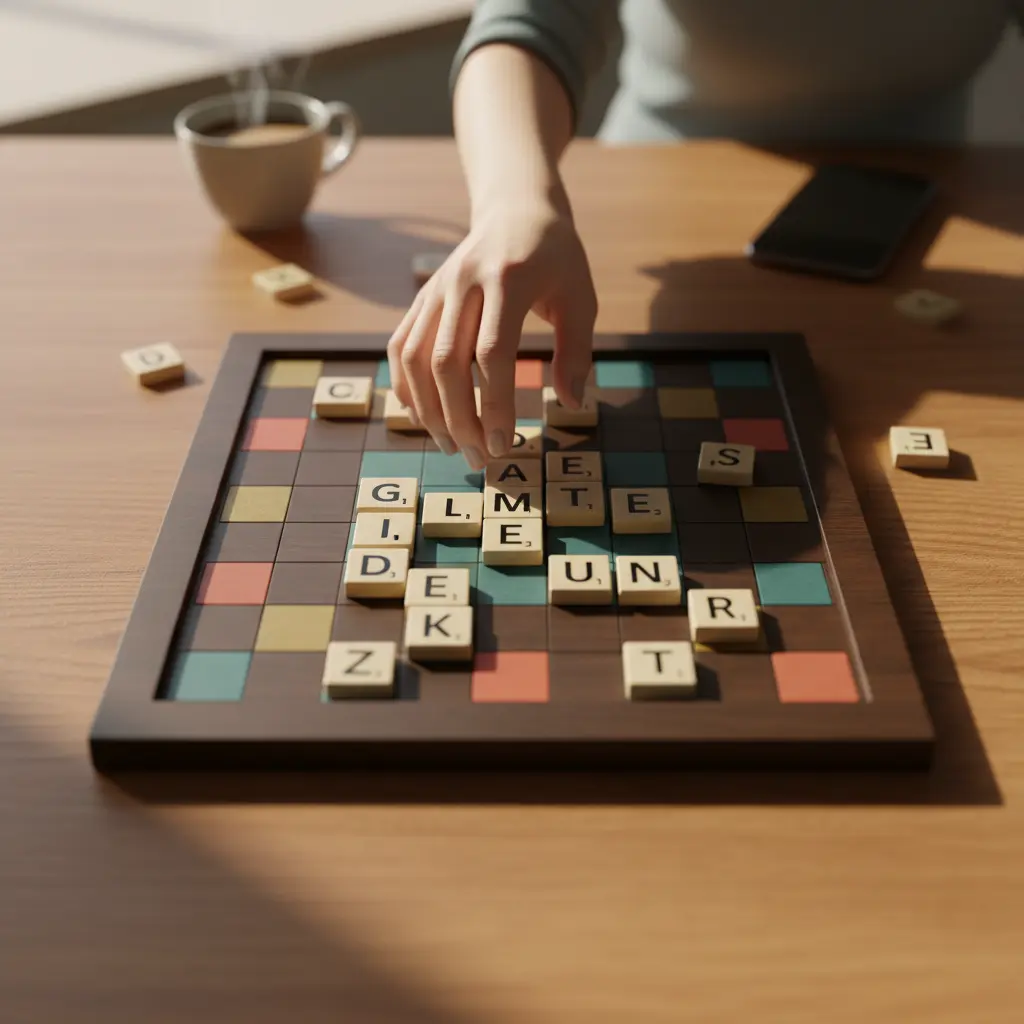
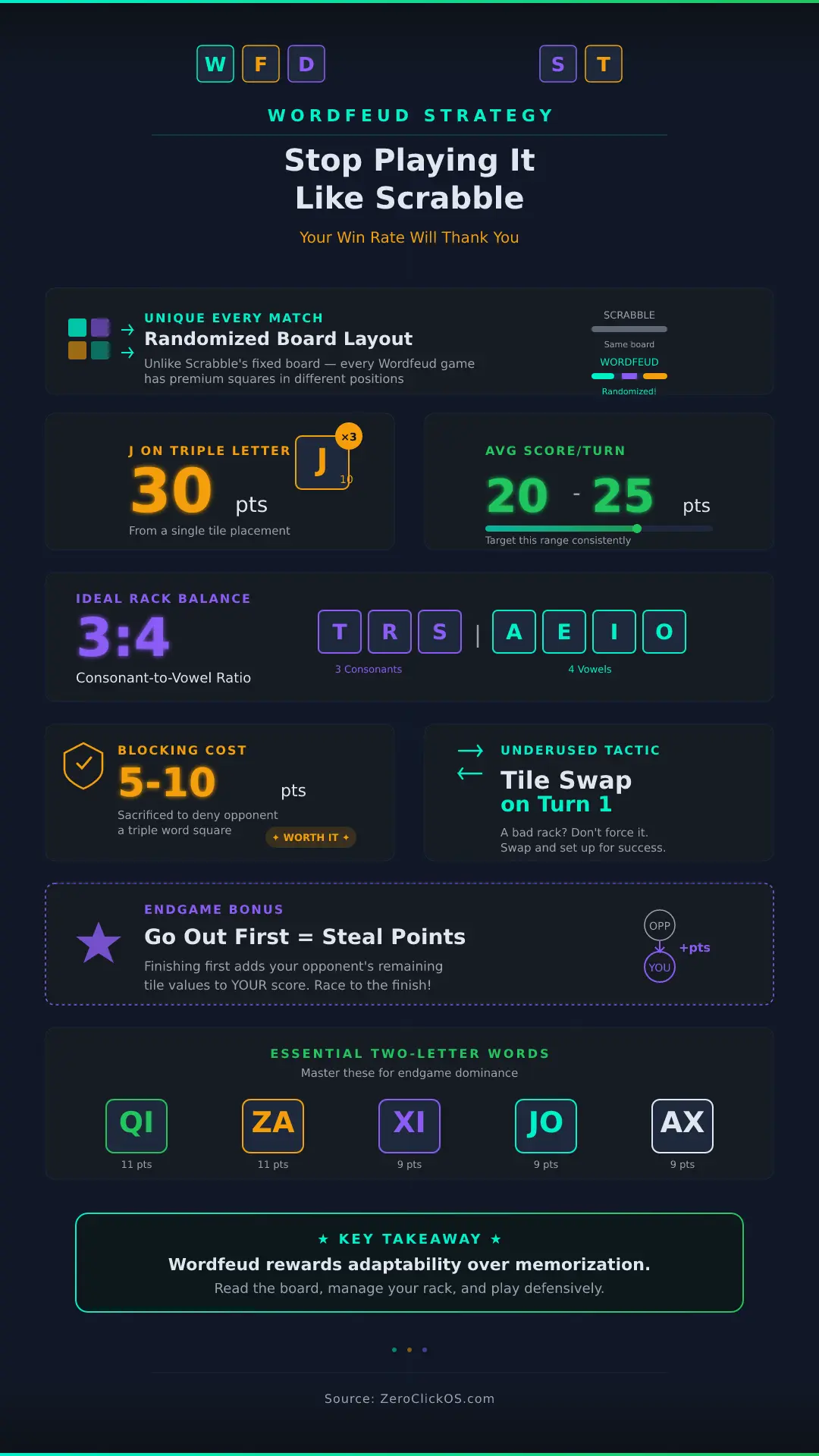
Effective Wordfeud strategy hinges on adaptability, not memorization, because every match generates a randomized board where premium squares land in different positions. Unlike Scrabble’s fixed layout, Wordfeud demands that you read each board fresh scanning for hotspots where bonus squares cluster before placing a single tile. At Last Letter First, we believe this dynamic terrain is exactly what makes the game worth mastering.
Opening Move Strategy and First-Move Advantage
Going first in Wordfeud doesn’t guarantee an advantage the way most players assume. In Scrabble, the first player automatically gets a double word score on the center star. In Wordfeud, the center square’s bonus varies, and surrounding premiums are randomized. Your first word might land in a scoring desert or right next to a triple letter bonus.
The first-move advantage is conditional, not automatic. A player going second with a stronger rack and a sharp eye for layout can easily overtake someone who went first carelessly.
If you go first and your rack is ugly (three Us and a Q, for instance), don’t force a weak word just to claim the center. Tile swapping on the first move is a legitimate tactic casual players almost never consider. You lose your turn, but you dump bad tiles and set up a stronger second play. That trade-off is often worth it.
When your rack cooperates, place high-value consonants like J, Z, or X on premium squares whenever possible. A J on a triple letter square can net 30 points from a single tile, a significant edge when average scores per turn hover around 20-25 points. But don’t ignore positioning. A four-letter word that scores decently without leaving a triple word square within your opponent’s reach is often smarter than a six-letter stretch you can’t defend.
Board Control and Premium Square Tactics
Board control in Wordfeud means treating premium squares as territory to claim, not just bonuses to land on. This is the single biggest mindset shift separating players who win consistently from those who win occasionally.
Your job isn’t just to reach premium squares. It’s to reach them while making it harder for your opponent to do the same. Controlling the center limits their ability to extend toward high-value edges. Keeping the action clustered reduces the premiums in play, lowering the ceiling on their potential scores.
And here’s what most guides won’t tell you: sometimes the smartest play scores fewer points than your best available option. Sacrificing five or ten points to block a triple word setup is almost always the right call. Scoring less to win more feels counterintuitive, but board control is a long game.
That said, defensive play isn’t always the answer. If you’re trailing by 40 points with six turns left, you need volatility. Opening the board means deliberately extending toward premiums, even if your opponent might reach them too. Chaos favors the player willing to take risks, especially when holding strong tiles like Z or a potential seven-letter play.
Tile Management and Rack Balance
Tile management in Wordfeud isn’t about holding the best letters. It’s about holding the most flexible ones. A rack full of high-point consonants looks impressive, but if you can’t play them, those tiles are dead weight.
Here’s the paradox most casual players miss: the tiles you choose not to play matter more than the ones you do. Every letter you keep shapes your next three or four turns. Dump duplicates early. You want variety, not a collection.
|
Rack Situation |
Smart Move |
Why It Works |
|
3+ of the same vowel |
Play or swap duplicates |
Opens draw pool for consonants |
|
All consonants, no vowels |
Swap 3-4 tiles immediately |
A vowel-starved rack rarely recovers |
|
Q without U |
Play QI or dump Q fast |
Holding Q costs 10 points if stuck at end |
|
Blank tile on rack |
Save it for a 5+ letter play |
Blanks are worth more as multipliers |
|
Balanced 3:4 ratio |
Look for longer words first |
Longer plays refresh more of your rack |
Swapping is underused and misunderstood. Players treat it like admitting defeat. It isn’t. Swapping three bad tiles on turn two is often smarter than forcing a weak 12-point play that leaves you stuck. Think of it as a strategic reset.
Late in the game, tile management shifts from “what should I keep?” to “what does my opponent have?” Wordfeud shows a tile distribution list in the app. Subtract played letters from the full distribution. By the time the bag empties, you should know exactly what your opponent holds, letting you block their best plays and sharpen your closing strategy.
Endgame Strategy That Seals the Win
Going out first adds your opponent’s remaining tile values to your score. That single rule makes endgame strategy the difference between a tight loss and a comfortable win. Frankly, most casual players don’t think about this until it’s too late.
Avoid getting stuck with high-point tiles like Q, Z, X, or J in the closing rounds. A 14-point play that dumps your Z beats holding it for a 30-point play that never materializes. According to Hasbro’s official tile values guide, high-point tiles carry the biggest penalties when unplayed, and Wordfeud follows similar logic.
When you’re down to your last few tiles, parallel plays become worth their weight in gold. Placing a word alongside an existing one, creating multiple two-letter words simultaneously, lets you use difficult leftover letters. Memorize a dozen solid two-letter words (QI, ZA, XI, JO, AX) and you’ll find exits where others see dead ends. The Collins Scrabble Words resource is reliable for valid plays that also work in Wordfeud, and building your two-letter word toolkit pays off in these clutch moments.
Your Next Move on the Board
The gap between losing regularly and winning consistently is smaller than you think. It’s not about memorizing obscure seven-letter words. It’s about making smarter decisions each turn: keeping your rack flexible, tracking what’s been played, thinking two turns ahead.
Start with one habit from this guide. Maybe that’s dumping duplicate tiles earlier. Maybe it’s checking the tile list before your last few moves. Pick one thing, practice it for a week, and watch what happens. The players who improve fastest aren’t the ones with the biggest vocabularies. They’re the ones who stop repeating the same mistakes.