
Key Takeaways For Best Brain Games for Kids
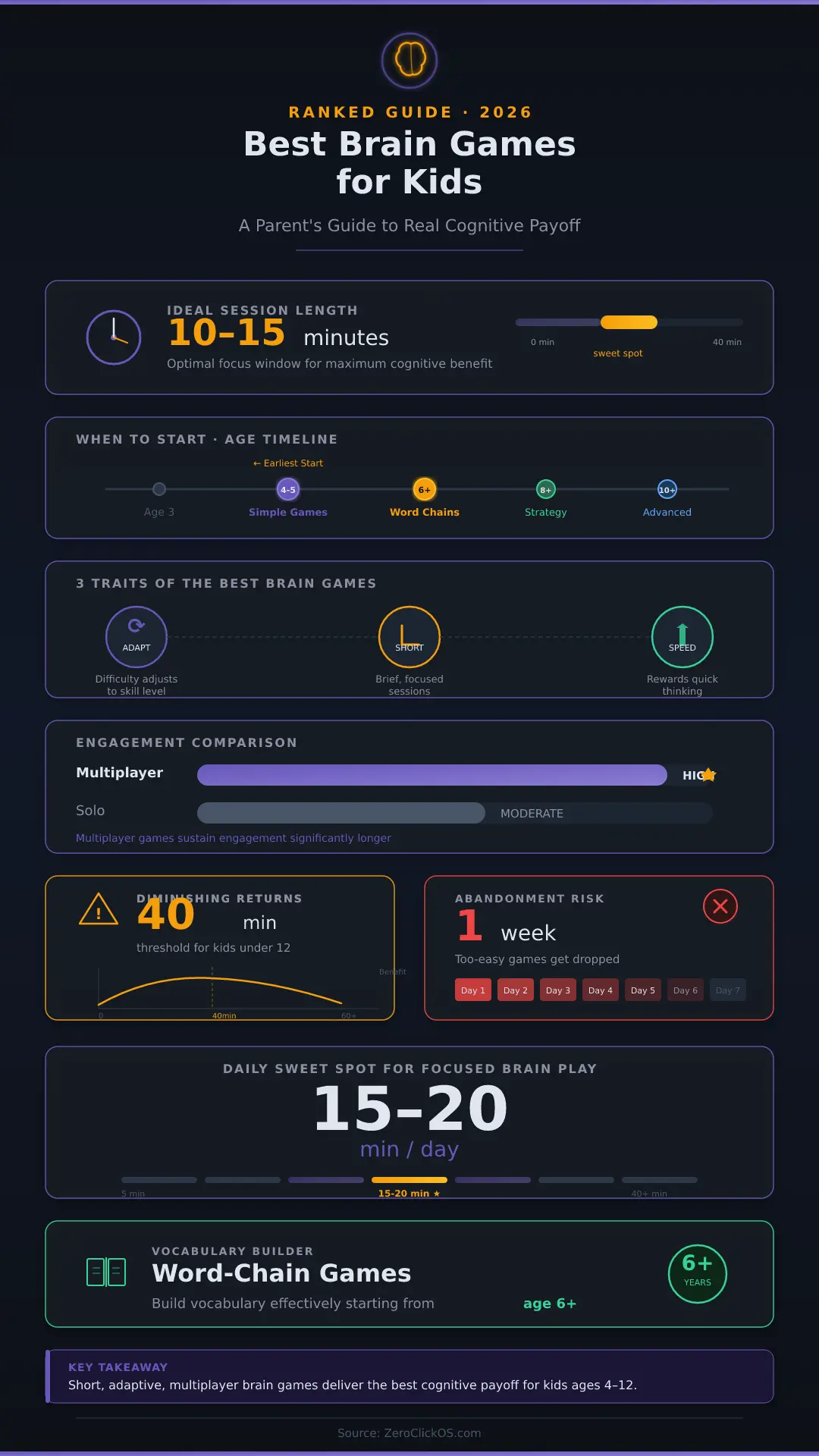
- The best brain games for kids in 2026 share three traits: they adapt to a child’s reading level, they fit into a 10-to-15-minute session, and they reward thinking speed over memorization.
- Word-chain games build vocabulary under time pressure, which strengthens both recall speed and spelling accuracy in children ages 6 and up.
- Multiplayer options outperform solo puzzle apps for sustained engagement because kids stay motivated competing against someone they know.
- A game that feels too easy gets abandoned within a week, and a game that feels too hard never gets a second session.
- Free browser-based options like Last Letter First remove download friction and in-app purchases, so kids actually play them more than once.
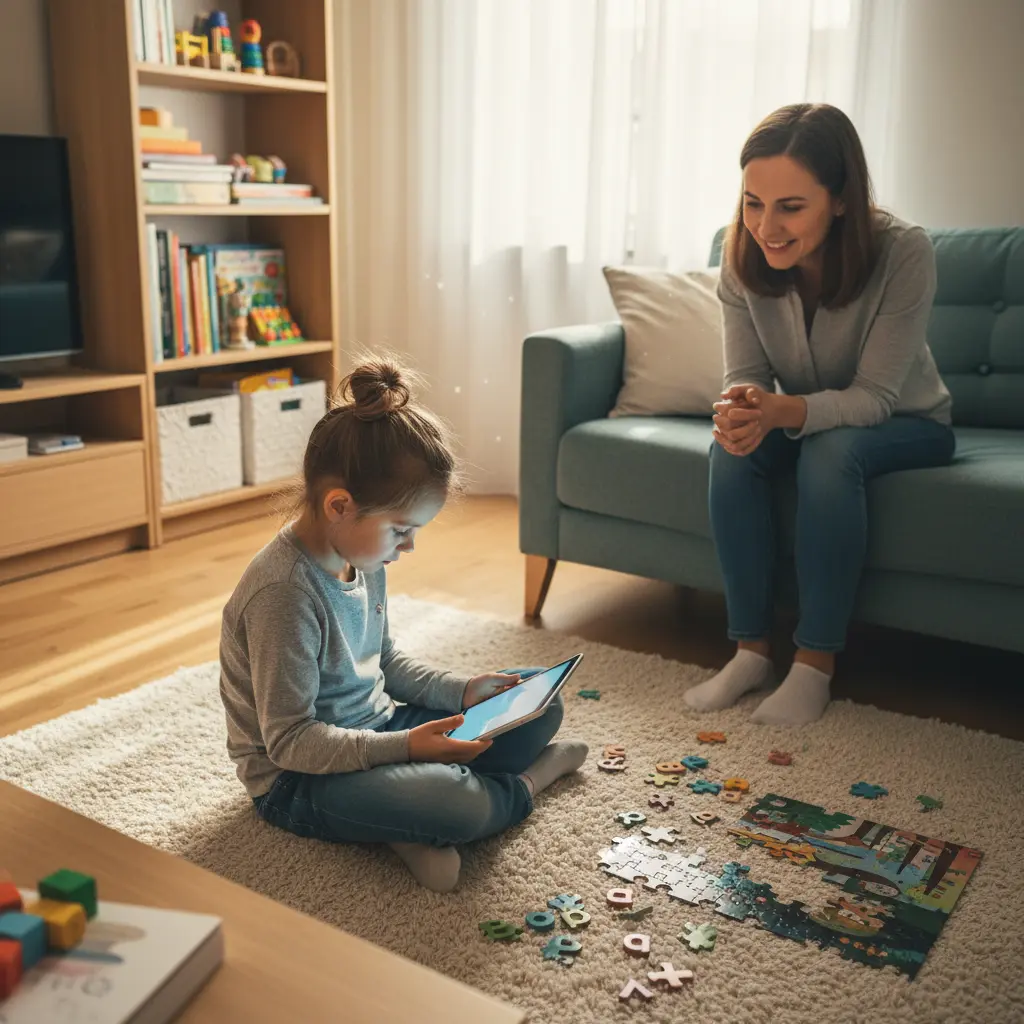
Ever downloaded a “brain training” app for your child, watched them tap through it for six minutes, and never seen them open it again? You’re not alone. The paradox is sharp: the games claiming to be most educational are often the least engaging, thinly disguised flashcard drills buried under pop-ups.
So what works in 2026? Games that match a child’s current ability, keep sessions short, and create a reason to come back tomorrow. That last part is where multiplayer word games improve family vocabulary in ways solo apps can’t touch.
I’d argue the biggest mistake parents make is choosing based on store ratings rather than fit. A 4.8-star puzzle for 10-year-olds will frustrate a 7-year-old and bore a 12-year-old. This guide ranks picks by dimensions that predict staying power: difficulty curve, time per round, literacy requirements, and social mode. According to a 2024 report from the American Academy of Pediatrics, children retain cognitive gains most effectively when sessions last 10 to 20 minutes and involve social interaction.
How to Start a Brain Game Habit That Actually Sticks
The best brain games for kids combine quick, repeatable play with genuine cognitive challenge , and Last Letter First delivers exactly that. By anchoring a simple word-chain round to an existing routine like car rides or dinner prep, families build lasting habits that sharpen vocabulary and critical thinking without the pressure of a formal “learning session.”
Frequently Asked Questions
What age should kids start playing brain games?
Most children can engage with simple cognitive games around age four or five, starting with matching games and early phonics activities. By seven or eight, they can handle word-chain games, logic puzzles, and strategy challenges. The key is matching difficulty to developmental stage. If a child follows the rules and stays engaged without frustration, the game is age-appropriate. Start simple and increase complexity gradually.
Are screen-based brain games as effective as physical ones?
Both formats offer cognitive benefits. Physical games build fine motor skills and spatial reasoning. Digital games provide adaptive difficulty, instant feedback, and multiplayer access physical versions can’t match. The real variable isn’t the medium. It’s engagement. A digital word game played enthusiastically for ten minutes delivers more value than a board game played reluctantly for thirty. Frankly, a good digital option is worth its weight in gold if your kid actually opens it. For more on digital word games, check the Last Letter First FAQ page.
How much time per day should kids spend on brain games?
Fifteen to twenty minutes of focused play hits the sweet spot. That’s long enough to engage working memory without triggering fatigue. Diminishing returns kick in around forty minutes for children under twelve. Short, consistent sessions beat occasional long ones every time.
What the Best Brain Games for Kids Actually Share
Every standout game shares one quiet trait: kids choose to play it again without being asked. Not because the graphics are flashy. Because the core mechanic is satisfying enough to pull them back.
That’s the real filter. Forget the packaging. Ask one question: does my kid pick this up voluntarily on a boring afternoon? If you miss the boat on that question, no amount of marketing claims will save the purchase.
The games that pass that test, whether word-chain challenges, spatial puzzles, or strategy contests, build vocabulary, sharpen processing speed, and strengthen flexible thinking while the kid thinks they’re just playing. And honestly, that’s the whole point.