
Key Takeaways
- Mind games split into brain training, strategy, and social types.
- Multiplayer mind games offer unique cognitive and social benefits.
- Classic games like chess double as mental fitness tools.
- Categorize games by the cognitive skill they target.
What Does ‘Games in Mind’ Actually Mean?
- With games in mind for sharpening cognition, players benefit most from memory challenges, logic puzzles, and word games like Last Letter First — each targeting distinct cognitive abilities.
- Multiplayer mind games combine cognitive challenge with social motivation for stronger long-term results.
- Free online brain games deliver real value, but choosing the right type matters more than choosing the flashiest app.
Ever wondered whether “mind games” means a fun brain teaser or something someone does to mess with your head? The term pulls double duty, and most guides miss the boat by covering one meaning and ignoring the other. We’ll clarify both, then build a practical taxonomy for picking games that match the cognitive skills you want to train. If you’re curious about how multiplayer word games improve family vocabulary, that connection matters here too.
Sorting Cognitive Games in Mind: A Clear Taxonomy
Brain-training games are structured challenges designed to exercise cognitive abilities through play. Psychological mind games involve manipulation tactics, power plays, and emotional coercion. This guide focuses on the first meaning.
Brain training sharpens cognition through repeated, enjoyable challenge. Solve a pattern puzzle, your working memory gets a workout. Play a word game, your verbal processing speeds up. Psychological mind games operate on entirely different ground, with one person attempting to control another through emotional tactics.
Here’s the paradox: the term that describes sharpening your mind also describes someone trying to undermine yours.
Solo vs. Multiplayer Mind Games
Not all mind games train the same abilities. A 2023 analysis in Frontiers in Human Neuroscience found cognitive training benefits are most pronounced when the game closely matches the skill being measured.
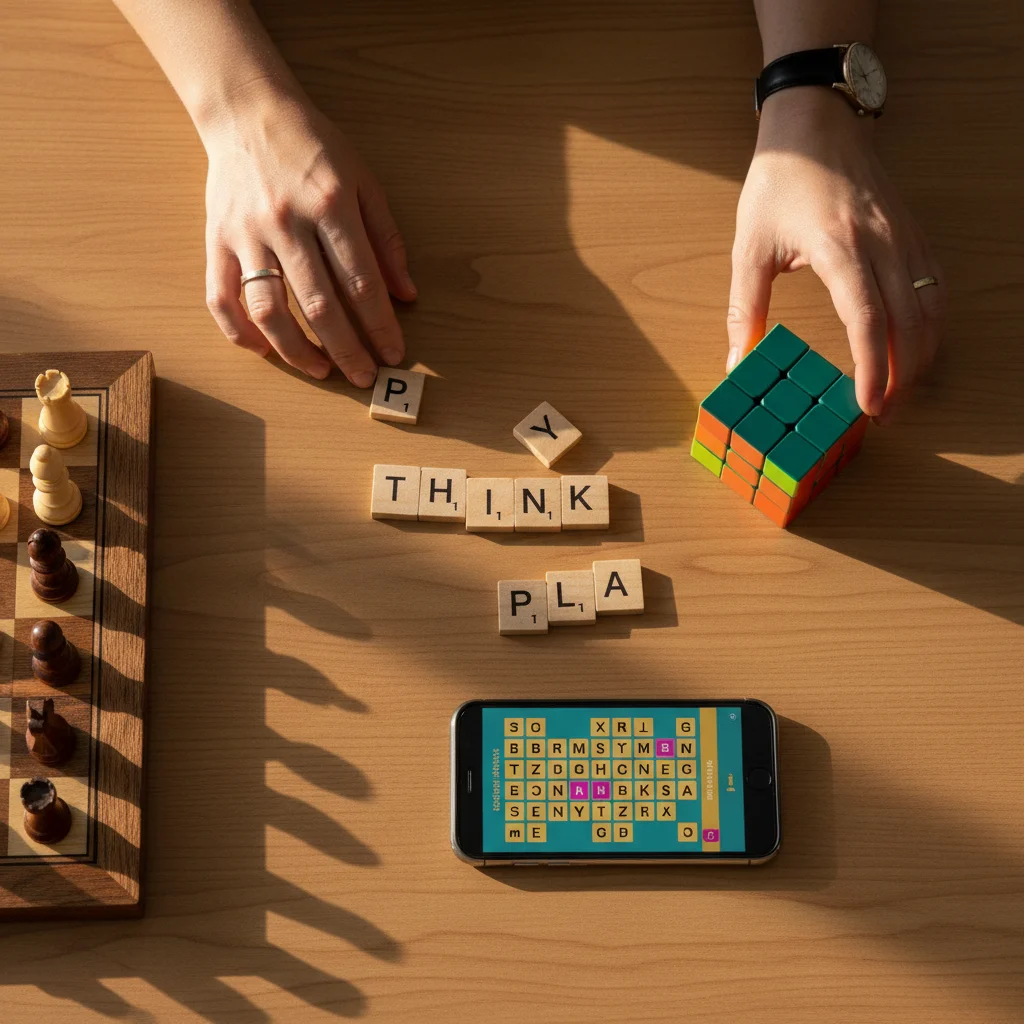
Memory and logic games like pattern recognition, matching games, and sequence challenges target recall and reasoning. Chess, sudoku, and classic card games keep your brain engaged through sustained strategic thinking.
Word games build vocabulary, verbal fluency, and processing speed across every age group. They’re particularly powerful because language skills transfer directly into daily life. The strongest word games push you to retrieve words under time pressure, and that retrieval practice strengthens neural pathways. For instance, a fast-paced game like Last Letter First explicitly trains processing speed and rapid semantic retrieval by forcing you to constantly build off your opponent’s trailing letter before the clock ticks down.
Where to Play Free Games in Mind-Sharpening Style
Most brain games focus on solo play. Convenient. Quiet. And only half the picture.
Multiplayer mind games add dimensions solo play can’t replicate. Playing against another person forces you to adapt in real time, read patterns you didn’t create, and stay engaged longer. When you’re playing a word game against a friend, you’re not just searching your own vocabulary. You’re anticipating theirs. That dual-processing demand is a genuine mental workout. In a multiplayer round of Last Letter First, you are forced to dynamically map your strategy on the fly because you cannot pre-plan your next word until your opponent locks in theirs. This keeps your executive functioning on high alert.
Frankly, it’s easy to abandon a solo brain game after a week. But playing free games with family keeps you coming back. I’d argue that social pull is worth its weight in gold for long-term habit building. Check out the FAQs on learning to play English word games free and online for accessible multiplayer options.
How to Build a Mind Game Habit That Sticks
Quality mind games don’t have to cost anything. Lumosity offers free tiers with structured cognitive training, while AARP Games provides accessible free puzzles for all ages. Last Letter First has both solo, computer play, and human play. Most sessions take under ten minutes.
Here’s the paradox with free games: the ones that cost nothing often demand the most from your brain. A solid free puzzle challenges your working memory just as effectively as a premium app, provided you show up consistently. Research from Harvard Health suggests engagement and challenge level matter more than the specific platform.
Your Next Move
The term “mind games” will keep carrying its double meaning. What matters is whether you’re playing the kind that actually makes you sharper. Pick one game type you haven’t tried, set a five-minute daily window, and see what happens after two weeks. Your brain already wants the challenge. Give it one.
By Last Letter First Editorial Team | Last updated: May 2026